Showing posts with label Video. Show all posts

Friday, 30 January 2015

The Lion and the Monkey review


The Lion and the Monkey


I found Tristans animation very fun entertaining and professional.
The story behind it was brilliant and he had obviously really thought about
what he was going to do. He explained that he had storyboarded everything and
thought of every detail, this gave the whole project real structure. He used
real tree from his garden for the background and this made the whole set look
really professional and real and I thought this was an ingenious touch. There
is also part of the animation where the monkey climbs down the tree and this also
looks amazing, he explained that he had used a piece of nylon and had his
mother help, he said it was painstaking but it really paid off in the long run.
For someone who had worked alone it was by far the best, well done.  

A link to his blog can be found here to see his other fantastic work. Tristan

First Crack At Animation


Here's my first try at an animation. It was great fun to use and the finished project isn't to shabby if I do say so myself.

Our Finished Animation!!!!!!


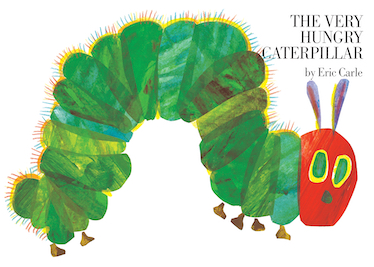
As you can see in the final video our finished animation needed a little bit more work, I'm proud to have completed it but after getting used to the product I would of liked another go at it with some minor tweaks.  My group consisted of me, Keyleigh Quinn and Andrea Egelstaff , my job was that of sorting out the sound and narration for the story, Keyleigh was in charge of filming and was helped by Andrea who also created all the clay models. Our concept is based on the story of the hungry caterpillar. The video was very similar to the Wallace and Gromit clay animation I have mentioned previously. The only character in the video is the caterpillar who eventually turns into a butterfly. The set we finally settled on was one of the pre made ones with a jungle themed background to keep in line with the outdoor theme. The caterpillars main theme is on the journey to changing into a beautiful butterfly. To make animation more believable I decided to use various stock sounds from Zu3d its self including a munching sound to show him eating, and a background countryside sound effect to make it more realistic. The only background music we used was for a little section whilst he's moving over a large section of food as a filler and for the end credits, both of these again we found on the sound effects section of Zu3d. The main issues we had with this project were lighting and the clay not sticking together correctly. to resolve these next time we would film all in one day and feed a wire through the caterpillar to keep it more rigid.


    Tuesday, 27 January 2015

    The Making Of The Hungry Caterpillar


    So after much delegation within my group we have decide to create our animation around the story of the hungry caterpillar, a book written by Eric Carle. The story follows a hungry caterpillar who spends a week eating as many things as he can. It's a light hearted story perfect for children. I thought it would be a nice touch to make Eric Carle aware of what we were doing so I left him a message on his personal website. 


    We are going to go with a Wallace and Gromit approach and make all of our characters and props out of clay and then slowly change them to create the impression of movement. 


    Here are some of our characters, and the food the caterpillar was going to indulge in. Here is a picture of a full sept up ready for filming.


    As you can see we have used Zu3d a program designed for making animations in primary school. We have used the ipad version, and through this we will do all our filming and editing and then will upload it to youtube. Once we have finished filming, I will then edit in the sound again using the software provided in Zu3d. 

    The record feature on the program was especially helpful as this allowed us to do everything through the ipad its self and didn't have to keep chopping and changing between ipad and computer. As well as this Zu3d has a large array of sound effect features. 
    Over all Zu3d was a really useful package and really helped us when completing our final animation. 

    Stop Motion an introduction

    So here's a brief history on stop motion filming. It is first credited to be invented by Albert E Smith and J Staurt Blackton for the film The Humpty Dumpty Circus. Blackton also went on to do The Haunted Hotel in 1907. It then went from strength to strength and has been used in a great many motion pictures including the AT AT walker scene in Star Wars shown below. 


    The biggest household name when it comes to stop motion is defiantly Wallace and Gromit. When it comes to clay animation Nick Park is definitely the leading expert. Wallace and Gromit produces Aardman are a truly British company and are still based in the UK. 


    Aardman studios


    So how is it all filmed? After detailed storyboarding, set and plasticine model construction, the movies are shot one frame at a time, moving the models of the characters slightly to give the impression of movement in the final film. It's a pain staking process and takes huge amounts of time. 


    The Beauty Of Sound

    “A truth whispered among animators is that 70% of a show's impact comes from the sound track.” Michel Dougherty

    I find this statement to be especially true and poignant. As you can see from my first blog, Tarzan was not only my most recent animated film but also one of my favourites. The sound track to this film was crucial, the music used in this film almost tells the viewer the emotions they are supposed to be feeling. Phil Collins tells the story purely through the sound track which is a feat in itself. I have already shown this video in previous blog posts but it is really more relevant to this post.


    In the video Phill Collins talks about how he even sang the songs in various different languages, this means that no matter what country you are in you still get the full benefit from the sound track. 

    More to this sound provides us with an extra sense and therefore an extra dimension to the cinema viewing experience. A horror film wouldn't be a horror film without the creepy and suspense sound effects, they easily contribute to 70% of the scare. 

    In this next video it shows sound effects are made, it also introduces the job behind it. Its official title is Foley artist after Jack Foley the guy who invented it.  


    Our Last Experience Of Animation


    Today we have been discussing what our last animation experience was. Mine was the Disney classic Tarzan. Released in 1999, it is the first and only ever animated version of the character Tarzan. As well as this at its time of release it was the most expensive animated film ever.


    The film was the first of its kind, Tarzan's production team developed a 3D painting and rendering technique known as Deep Canvas. This was the first time this had ever been used and was created by Eric Daniels. This technique works by allowing the artist to produce a CGI background that looks like traditional painting. It works by keeping track of paint strokes applied in 3D space. For this creation the team was awarded a technical achievement award in 2003. 

    Here is a three part video on the making of the film and how the animation team conquered such a mammoth task.


    The third video is especially important as it shows us how a story board works and how crucial it is to the over all animated experience.